The most common reason a first altar never gets built is not lack of interest. It is overwhelm. Search "witch altar essentials" and you'll find lists running to twenty or thirty items, athames, chalices, pentacles, wands, multiple sets of elemental candles, deity statues, before anyone has cast a single spell. None of that is wrong, exactly. It's just the wrong place to start.
This guide strips the beginner altar down to what actually matters, in the order it actually matters, then builds it back up with real options at every budget. You will finish this page knowing exactly what to buy, where to put it, and what to do with it on day one. Every tool links directly to where you can find it in the Sanctuary, and three complete beginner spells plus a free printable setup checklist sit at the end.
Jump to a Section
- What is an altar actually for, and do you need one to practice witchcraft?
- How do you choose where your altar goes?
- What are the five genuine essentials for a first altar?
- Which crystals should an absolute beginner actually start with?
- How do you actually lay everything out on the altar?
- How do you consecrate a new altar for the first time?
- Three free beginner spells for your first altar
- How are modern Wiccans setting up altars in 2026?
- Free Printable Beginner Altar Checklist
What is an altar actually for, and do you need one to practice witchcraft?
An altar is a dedicated physical space that signals to your mind and your practice that something different is happening here, and while it is not strictly required to cast a spell or work magic, almost every beginner who skips one reports it taking far longer to build consistent focus than those who give their practice even a small fixed space.
You do not need an altar to be a witch. Magic happens in your intention and attention, not in any single object. But a dedicated space does something practical that willpower alone struggles to replicate: it creates a consistent environmental cue. The same way a gym bag by the door makes you more likely to actually exercise, an altar that is always there, always ready, makes it dramatically easier to actually sit down and practice rather than meaning to "get into it properly someday." Think of the altar as scaffolding for a habit you are trying to build, not a stage prop you need before the habit counts.
Shop Altar SuppliesHow Do You Choose Where Your Altar Goes?
Before buying a single item, solve the space question, because the answer shapes everything else. The good news for 2026 is that the rise of small-space and discreet altar setups means there is no longer a "correct" minimum size or visibility level. A genuine altar can live on a full table, a single shelf, inside a converted shoebox kept in a drawer, or on a section of windowsill that gets cleared and reset before each use.
Shelf or Windowsill
The most common modern beginner setup. A single floating shelf or a cleared windowsill works perfectly and keeps the altar visible without needing floor space. Ideal for renters and shared households where a permanent table isn't practical.
Box Altar
A lined box, decorated or plain, that opens to reveal a compact altar and folds shut and stores under a bed or in a closet when not in use. Genuinely popular for 2026's privacy-conscious, shared-living, or travel-minded practitioners.
Nightstand or Dresser Top
A section of furniture you already own, cleared and dedicated rather than purchased new. Particularly suited to bedroom altars focused on rest, dreamwork, and calming nightly ritual, since it's already exactly where you need it.
Dedicated Small Table
If you have the space, a small dedicated table, even a side table repurposed entirely, gives the most flexibility for layout and tool placement, and is the easiest to expand as your practice grows.
Whichever option fits your space, three practical conditions matter more than aesthetics at this stage: the surface should be stable enough to hold a lit candle safely, it should be somewhere you will actually walk past or sit near regularly, and it should be a space you have at least some control over, so it won't be disturbed mid-working.
Does an altar need to face a specific direction?
No single direction is universally required, though many Wiccan practitioners traditionally orient their altar toward the north to honour Earth energy, and the most accurate answer for a beginner is to trust the orientation that feels most natural in your specific space over any rule.
Some traditions favour east for new beginnings and the rising sun, others favour north for grounding and the element of Earth. If your room only realistically allows one wall or corner, do not let directional rules talk you out of using the space you actually have. A functioning altar in a less traditional direction will always outperform no altar at all because the "correct" wall is occupied by a bookshelf.
What Are the Five Genuine Essentials for a First Altar?
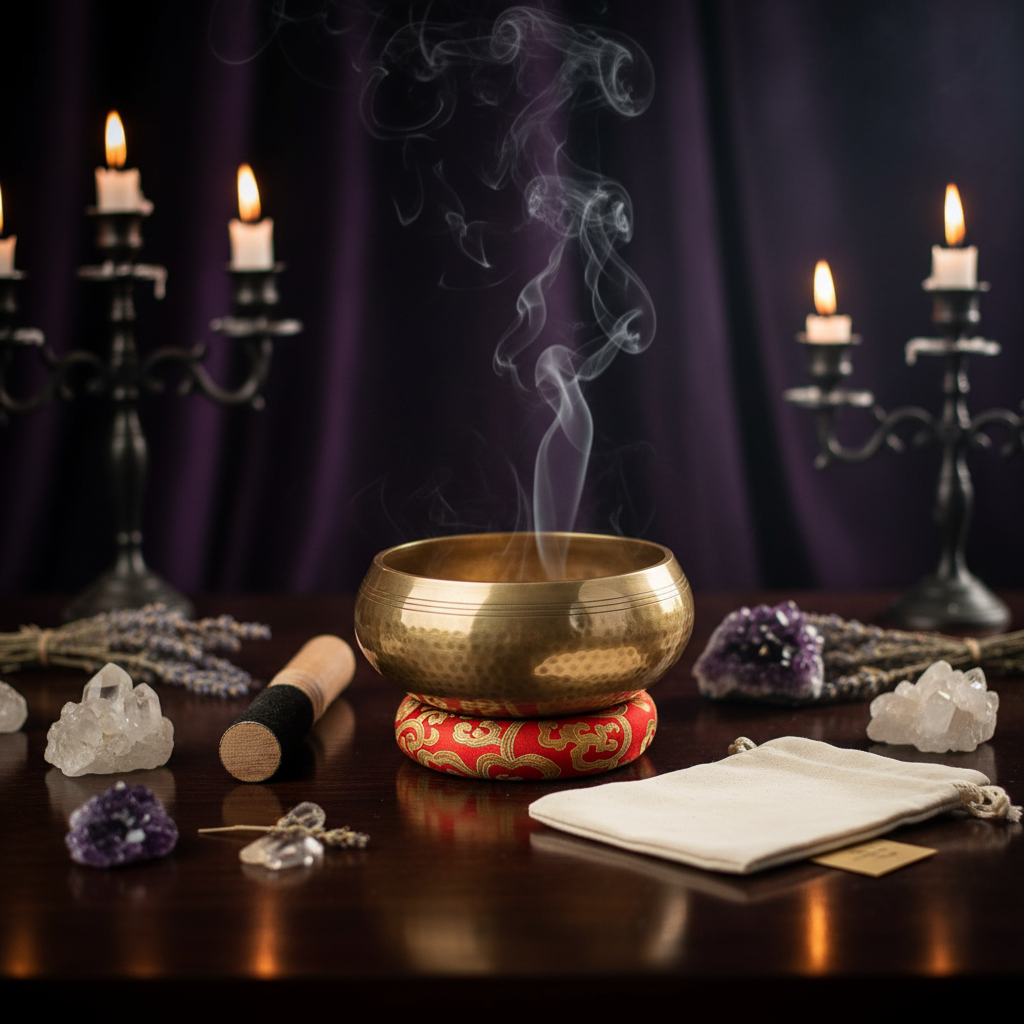
Every tradition-spanning source on altar building agrees on one underlying structure even when the specific objects vary: a complete altar represents the four classical elements, Earth, Air, Fire, and Water, plus a fifth point often called Spirit, which anchors the whole arrangement together. Here is the leanest possible version of that structure that still genuinely works.
| Element | What It Represents | Simplest Tool | Upgrade Option | Shop |
|---|---|---|---|---|
| Earth | Grounding, stability, the physical body | A small dish of salt or a plain stone | A pentacle disc or crystal cluster | View |
| Air | Thought, communication, intention carried upward | A single stick of incense | A feather, bell, or dedicated incense holder | View |
| Fire | Will, transformation, the spark of action | One plain white candle | Coloured candles matched to specific intentions | View |
| Water | Emotion, intuition, the flow of feeling | A small cup or bowl of plain water | A dedicated chalice or goblet | View |
| Spirit | The unifying centre, your own presence and intention | A personal object that feels meaningful | A deity statue, sigil, or dedicated journal | View |
Notice that every "simplest tool" column above can be satisfied with something you may already own. This is deliberate. The upgrade column is where the Sanctuary's dedicated altar supplies collection becomes genuinely useful, not as a requirement, but as a meaningful improvement once you know your practice is sticking.
A Note on Cost
You can build a complete, functioning five-element altar for well under the cost of a single elaborate "starter kit" sold elsewhere. A plain candle, a small bowl, a stick of incense, a personal object, and a pinch of salt or a single stone satisfy every category above. Spend your first money on whichever single upgrade genuinely excites you, not on filling every category at once.
Which Crystals Should an Absolute Beginner Actually Start With?
What crystals should a beginner buy first, before anything else?
A genuine beginner needs only three crystals to cover the most common early practice needs: clear quartz for general amplification and clarity, amethyst for calm and spiritual connection, and rose quartz for self-compassion and emotional grounding, with everything more specialised, including dedicated protection stones, added later once a specific need arises.
This is a deliberately different and narrower list from a protection-specific crystal guide, because a beginner altar's first crystals should be generalists, not specialists. Clear quartz is sometimes called the master healer for good reason: it amplifies whatever intention it is paired with, making it the single most versatile stone in any collection. Amethyst supports calm, clarity, and the kind of settled, unhurried state that early practice benefits from most. Rose quartz, often misunderstood as purely a "love" stone, is equally valuable as a self-compassion stone for a beginner who is inevitably going to feel unsure or self-conscious during their first few workings.
For a dedicated, deeper look at protective stones specifically, including a full nine-stone comparison table and a complete warding ritual, see our crystals for protection and power guide. That depth is intentionally not repeated here; this section exists purely to answer the narrower, more urgent beginner question of what to buy on day one.
Shop Beginner Crystals| Crystal | Why Beginners Start Here | Simple First Use | Shop |
|---|---|---|---|
| Clear Quartz | Amplifies any intention, the most versatile single stone | Hold during any spell to boost focus | View |
| Amethyst | Calm, clarity, gentle spiritual opening | Keep on the altar during meditation | View |
| Rose Quartz | Self-compassion for an inevitably uncertain start | Carry during your first week of practice | View |
Once these three feel familiar, the most natural fourth addition is whichever stone responds to your specific, current need, abundance, sleep, confidence, rather than a stone chosen purely because a list says it is essential. Browse the full crystal collection when you are ready to expand intentionally.
How Do You Actually Lay Everything Out on the Altar?
Is there a correct way to arrange items on a witch altar?
There is no single mandatory layout, but the most commonly used beginner structure places Earth and Water on the left side of the altar, Fire and Air on the right, with a central Spirit item positioned at the back centre, a layout drawn from Wiccan elemental correspondence that gives most beginners a sensible, repeatable starting point.
The logic behind this common left-right split traces back to a traditional Wiccan association of the left side with the feminine, receptive, intuitive qualities (Water, Earth) and the right with the masculine, active, projective qualities (Fire, Air), though plenty of contemporary eclectic practitioners now arrange purely by what feels intuitively balanced rather than following the gendered framing at all. Use whichever resonates; consistency in your own layout over time matters more than matching any external rule, since a layout you return to repeatedly builds genuine familiarity and ease.
A practical beginner arrangement, viewed as if standing in front of the altar facing it:
- Back centre: your Spirit item, whatever feels personally meaningful, with anything taller placed here so it doesn't block your view of the rest
- Front left: your Water vessel and Earth dish, side by side or stacked depending on space
- Front right: your candle and incense, kept apart enough that nothing catches fire by accident
- Centre front, closest to you: open working space, kept clear until a specific spell calls for something there
An altar cloth, while not strictly essential, solves two real problems at once: it visually defines the boundary of your sacred space distinctly from the surrounding furniture, and it protects whatever surface you're using from candle wax and water rings. A plain dark cloth is the single highest-value low-cost addition most beginners make in their second week of practice.
How Do You Consecrate a New Altar for the First Time?
What does it mean to consecrate an altar, and is it necessary?
Consecrating an altar means formally dedicating the space to your practice and clearing it of any prior, unrelated energy before its first real use, and while not strictly mandatory, it gives a first altar a clear, memorable starting point that most practitioners find meaningfully strengthens their sense of the space as genuinely sacred rather than just decorative.
The process is short and does not require advanced skill. Clear the space physically first, wipe the surface down, remove anything unrelated. Then clear it energetically, commonly with smoke from a stick of incense, candle smoke, or simply a few minutes of quiet, focused visualisation if smoke isn't practical in your space. Place your five elemental items in their positions. Light the candle. Speak a simple dedication aloud, in your own words or adapted from the structure below, and the altar is consecrated.
Three Free Beginner Spells for Your First Altar
These three spells are written specifically for someone working with the lean five-item altar described above, using only the simplest version of each tool. Each one is short, forgiving of imperfect technique, and designed to teach a foundational skill alongside its practical outcome.
The First Light: A Simple Intention-Setting Candle Spell
The single best spell to perform the very first time you sit at your new altar. It teaches the core skill every other spell builds on: holding a clear intention while focused on a flame.
-
Sit comfortably in front of your altar. Take three slow breaths. There is no wrong way to begin; simply arriving and being present is the first part of the spell.
-
Decide on one clear intention. Keep it small and genuinely yours for this first attempt. "I am open to learning this practice with patience" works well as a first intention, since it asks nothing of the outside world and everything of your own readiness.
-
Light the candle and speak your intention aloud, simply, in your own words.
-
Watch the flame for two full minutes without trying to do anything else. Let your mind settle around the intention rather than analysing it.
-
Close by saying: "This is set. So mote it be." Let the candle burn for a few more minutes if safe to do so, then snuff it.
"So mote it be" is a traditional Wiccan closing phrase meaning roughly "so it must be" or "so it is," used to mark the end of a working. You are welcome to use your own closing words instead; the function matters more than the specific phrase.
The Clear Cup: A Water and Crystal Calming Spell
A gentle spell for settling an anxious or scattered mind before any other working, using your Water element and your rose quartz or amethyst. Excellent as a regular weekly practice, not only a one-off.
-
Place the crystal beside the cup of water on your altar. Sit and take a few settling breaths.
-
Hold the crystal in both hands. Speak: "I release what does not need to be carried right now."
-
Dip a fingertip into the water and touch it lightly to your forehead or wrists, feeling a small, simple sense of clearing.
-
Sit with the crystal for three to five minutes, simply breathing, letting your shoulders drop, with no requirement to think about anything in particular.
-
Close by saying: "I am steady. I am here." Keep the crystal nearby for the rest of the day if helpful.
This spell works equally well with no formal "ending," simply rising when you feel ready. Not every working needs a dramatic close; sometimes settling itself is the entire point.
The Open Door: A Simple Welcome Spell for a New Practice
A complete five-element working that uses every item on your lean starter altar together for the first time, designed as a gentle "opening ceremony" for your practice itself rather than for any single external outcome.
-
Arrange your five items in the layout that felt right when you set up your altar. Light the candle and the incense.
-
Touch each item in turn, speaking simply: "Earth, ground me. Air, clear my mind. Fire, give me will. Water, open my feeling." Pause briefly after each line.
-
Hold your Spirit item last and speak: "And I bring myself, exactly as I am right now, ready to begin."
-
Sit quietly for a minute or two, simply noticing how the space feels with all five elements active together.
-
Close with: "This practice is open. So mote it be." Snuff the candle and incense.
-
Write one honest sentence in your notebook about how you feel right now, with today's date. This becomes the first entry in what can grow into a full grimoire over time.
Treat this spell as a marker, not a test. There is no specific feeling you are supposed to have afterward. The fact that you completed it is the entire success condition.
How Are Modern Wiccans Setting Up Altars in 2026?
What altar trends are shaping modern Wiccan and witchcraft practice right now?
Three trends define contemporary altar building in 2026: a strong move toward discreet, space-saving setups for renters and shared households, a growing preference for sustainably sourced and secondhand altar materials over mass-produced kits, and continued personalisation that prioritises what genuinely feels meaningful over strict adherence to any single traditional template.
The discreet-altar movement reflects the reality that a large share of contemporary practitioners live in shared housing, rent rather than own, or simply prefer privacy around their practice. Box altars, fold-away shelf setups, and altars disguised within ordinary furniture have moved from niche workaround to genuinely mainstream recommendation across current witchcraft and Wiccan resources.
The sustainability shift shows up as a preference for ethically sourced crystals, secondhand or vintage altar tools with their own accumulated history, and upcycled containers for herb and crystal storage rather than uniform plastic-packaged kits. This pairs naturally with earth-honouring Wiccan values that predate the trend by decades, simply finding new, more accessible expression.
Most significantly, the strongest current thread across modern Wiccan commentary is a continued, explicit move away from rigid "you must have this exact item" thinking toward altars built around genuine personal resonance, family heirlooms, ancestor photographs, regionally specific natural objects, deity representations chosen through real felt connection rather than popularity. This guide's lean five-essentials approach sits comfortably within that same spirit: start minimal, start genuine, and let your altar grow only in directions that actually serve your practice.
Read Our Full Paganism Practice GuidePractitioner Notes · Starting Strong Without Overbuying
- ◆Resist the urge to buy everything in week one. A complete five-element altar costs very little and works immediately. Specialist tools earn their place once a specific need actually arises, not before.
- ◆Use what you already own before buying new. A kitchen bowl, a plain candle from a drawer, a stone from a walk, all genuinely count. Personal history adds charge that a brand-new purchase cannot replicate immediately.
- ◆Keep a simple record from day one. Even a single line per session in a notebook becomes, over months, the single most valuable tool on your entire altar: a record of your own growth.
- ◆Cleanse your space, not just your tools. A quick tidy and a few slow breaths before each session matters more than any specific cleansing herb. The herb amplifies a habit; it doesn't replace one.
- ◆Let your altar visibly change as you grow. A first altar that looks identical a year later usually signals a practice that stalled, not one that found perfection early. Expect and welcome change.
Beginner Altar Setup Checklist
Print this section, tick items off as you gather them, and bring it with you when you shop. Use the browser print function to save a clean printable copy.
The Five Essentials
- Earth: salt, stone, or pentacle disc
- Air: incense or a feather
- Fire: one plain candle
- Water: a small cup or bowl
- Spirit: one personally meaningful object
Beginner Crystal Set
- Clear quartz
- Amethyst
- Rose quartz
Setup Steps
- Choose your altar location
- Clear and clean the surface
- Lay an altar cloth (optional)
First Session Checklist
- Arrange all five elements
- Consecrate the altar aloud
- Perform The First Light spell
- Start a one-line practice journal
Optional Upgrades, Later
- Dedicated chalice or goblet
- Pentacle disc
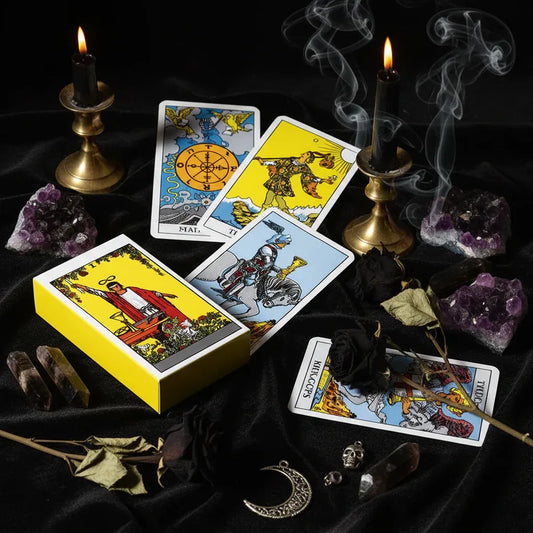
- Deity statue or tarot deck
Everything for Your First Altar, in One Place
Candles, crystals, incense, chalices, and complete beginner sets, all available now with free shipping over $35 across Australia and the US. AfterPay and PayPal at checkout.