Paganism is one of the most misunderstood words in religious vocabulary, partly because it was never meant to describe a religion in the first place. It started as an insult, became an academic category, and was eventually reclaimed by millions of people as a genuine, lived spiritual identity. That history matters, because understanding where the word came from explains almost every misconception that still surrounds it today.
This guide covers paganism completely: its origins and etymology, the full historical timeline from prehistoric ritual through to the contemporary revival, the major gods and pantheons across the traditions that fall under the pagan umbrella, how sigils and symbolic magic function within pagan practice, how paganism compares to and differs from the Abrahamic religions, and a direct, practical answer to the question most readers actually came here for: how do you begin practicing.
Jump to a Section
- What is paganism, exactly?
- Where does the word pagan actually come from?
- How did paganism evolve through history?
- What are the major pagan traditions today?
- Which gods and pantheons do pagans worship?
- How do sigils and symbols work in pagan practice?
- What is the Wheel of the Year?
- How does paganism differ from Christianity, Islam and Judaism?
- Is paganism the same thing as Wicca or witchcraft?
- How do you actually start practicing paganism?
- What do people most often get wrong about paganism?
What is paganism, exactly?
Paganism is an umbrella term for a wide range of polytheistic, pantheistic, animistic, or nature-revering spiritual paths, both ancient and modern, that exist outside the three Abrahamic religions of Christianity, Judaism, and Islam, and it has no single founder, central text, or unifying doctrine.
This lack of central authority is not a gap in the religion. It is the defining structural feature of it. Where Christianity has a Bible and a church hierarchy, and Islam has the Quran and recognised schools of jurisprudence, paganism has never had an equivalent, even in antiquity. Ancient Greek, Roman, Egyptian, Norse, and Celtic religious practice were each internally diverse, regionally variable, and far more concerned with ritual correctness than shared belief. Modern paganism inherits that same structure: practitioners are far more likely to be unified by shared practice (seasonal ritual, offerings, divination) than by a shared creed.
According to Encyclopaedia Britannica, modern pagan religions collectively draw inspiration from the extinct pre-Christian religions of Europe, North Africa, and West Asia, and theologically range across the entire spectrum from pantheism and monotheism to polytheism and even atheism. There is no single unifying feature beyond that shared ancestry of inspiration.
Read Our Beginner’s Guide to PaganismWhere does the word pagan actually come from?
The word pagan derives from the Latin paganus, meaning country dweller or rustic, and was first applied by early Christians to non-Christians as a term of othering rather than as a description any pre-Christian person ever used for themselves.
This is one of the most consequential facts in the entire history of the word. According to Wikipedia’s sourcing of religious historian Owen Davies, the notion of paganism as generally understood today was created by the early Christian Church as one of the central antitheses used in the process of Christian self-definition, and it was used in a derogatory sense throughout most of its history. No ancient Roman, Norse Viking, or Celtic druid ever called themselves a pagan. The Norse, for example, had no equivalent word for religion at all; they spoke instead of customs, passed down orally rather than codified into any single doctrine, according to research published by Ancient Origins.
It was not until the 19th and 20th centuries that the term was reclaimed as a positive self-descriptor, first by Romantic-era artists and writers inspired by the ancient world, and later by the practitioners of the modern pagan revival who deliberately took back a word that had been used against their spiritual ancestors for over a thousand years.
Read Our Pagan Religion Deep DiveHow Did Paganism Evolve Through History?
The story of paganism is not a single continuous thread. It is several independent threads, prehistoric ritual practice, classical polytheism, medieval folk survival, and modern reconstruction, that get bundled together under one label because Christianity needed a single word for everything it was not. Tracing the actual evolution requires separating these threads while still showing how each one feeds into contemporary practice.
The Evolution of Paganism: From Prehistory to Modern Revival
From a 30,000-year-old figurine to a documented, accelerating contemporary revival, paganism has never been a single line, but every thread leads to where millions of practitioners stand today.
What Are the Major Pagan Traditions Today?
Modern paganism is not one religion wearing different costumes. It is several genuinely distinct traditions, each with its own sources, its own deities, and its own approach to ritual, loosely gathered under a shared umbrella because they all draw on pre-Christian, nature-revering, or polytheistic inspiration. Here is the clearest possible breakdown of the traditions you are most likely to encounter.
Wicca
Founded publicly in 1950s England by Gerald Gardner, Wicca draws inspiration from pre-Christian European traditions while functioning as a genuinely 20th-century new religious movement. Followers typically identify as witches, work with a Goddess and God duality or a wider pantheon, and observe the Wheel of the Year. Most practitioners today work solitarily rather than in initiatory covens.
Shop Wiccan Practice ToolsDruidry
Modern Druidry takes its identity from the Iron Age ritual specialists of Western Europe, the druids of Celtic society. Because so little authentic historical material survived, contemporary Druidry is substantially reconstructive, drawing on surviving fragments, classical accounts, and a strong emphasis on nature reverence, the natural cycles, and the sacredness of trees, groves, and the land.
Shop Druidic Herbal ToolsHeathenry / Asatru
Modelled on the pre-Christian religions of Germanic and Norse-speaking communities, Heathenry (also called Asatru, meaning faith in the gods) centres on the Aesir and Vanir, the runic tradition, and a framework of reciprocal honour and oath-keeping. It is one of the most historically and textually grounded reconstructive pagan paths, owing to the survival of the Eddas and sagas.
Read the Full Viking Gods GuideSlavic Native Faith (Rodnoverie)
Known across linguistically Slavic regions as Rodnoverie in Russian, Ridnovirstvo in Ukrainian, and Rodzimowierstwo in Polish, Native Faith traditions reconstruct the pre-Christian religion of the Slavic peoples, centring deities such as Perun and Mokosh and emphasising ethnic and ancestral continuity with the land and its older customs.
Shop Northern Tradition ToolsEclectic Paganism
Rather than reconstructing a single historical tradition, eclectic pagans draw deliberately from multiple pantheons and practices, building a personal spiritual framework suited to their own intuition and experience. This is now one of the most common approaches among solitary practitioners, who answer to no single lineage or coven structure.
Shop Eclectic Practice KitsSecular Paganism
According to a documented overview of pagan traditions compiled by the American Humanist Association, Secular Pagans hold a deep reverence for the natural world and may believe all things in nature carry a unique spirit or soul, without committing to belief in deities. This group includes atheists, agnostics, and scientists who arrive at a pagan worldview through ecological or philosophical reasoning rather than theistic belief.
Shop Nature-Based ToolsWhich Gods and Pantheons Do Pagans Worship?
Do all pagans worship the same gods?
No. There is no single pagan pantheon, because paganism is not one religion but a family of traditions, each drawing on a different historical or cultural source, meaning a Heathen practitioner, a Hellenic reconstructionist, and an eclectic Wiccan may honour entirely different deities while still falling under the same broad umbrella term.
The deity or deities a pagan practitioner works with depends almost entirely on which tradition they follow. A Norse Heathen works with the Aesir and Vanir, Odin, Thor, Freya, and the wider Norse pantheon, documented in depth in our complete Viking gods guide. A Hellenic reconstructionist works with the Greek Olympians. A Slavic Native Faith practitioner honours Perun and Mokosh. An eclectic or Wiccan practitioner may work with a generalised Goddess and God duality, specific deities chosen by personal resonance, or a combination drawn from multiple pantheons depending on the purpose of a given working.
What unites these otherwise distinct theological frameworks is not the identity of the gods but the underlying structure of the relationship: most pagan deity work is understood as reciprocal, built through offering and ongoing practice rather than granted unconditionally, and most traditions hold that the gods are real, active presences rather than purely symbolic or psychological constructs, even among practitioners who hold that belief loosely.
Shop Deity and Pantheon Tools| Tradition | Primary Pantheon | Key Deities | Primary Source Texts | Shop |
|---|---|---|---|---|
| Heathenry / Asatru | Norse, Aesir and Vanir | Odin, Thor, Freya, Tyr | The Poetic and Prose Eddas | View |
| Hellenic Reconstructionism | Greek Olympian | Zeus, Athena, Hermes, Hecate | Homeric Hymns, Hesiod | View |
| Druidry | Celtic, reconstructive | The Morrigan, Cernunnos, Brigid | Classical accounts, surviving lore | View |
| Rodnoverie | Slavic Native Faith | Perun, Mokosh, Veles | Oral tradition, folk survival | View |
| Wicca / Eclectic | Variable, often dual | The Goddess and God, chosen deities | Modern Wiccan liturgy | View |
How Do Sigils and Symbols Work in Pagan Practice?
Why do sigils and symbolic magic appear across almost every pagan tradition?
Sigils and sacred symbols appear across nearly every pagan tradition because encoding intention or divine force into a physical symbol is one of the oldest and most cross-culturally consistent magical technologies in human history, predating writing itself in several archaeological contexts.
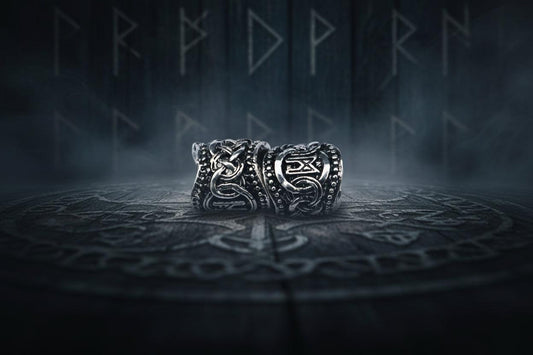
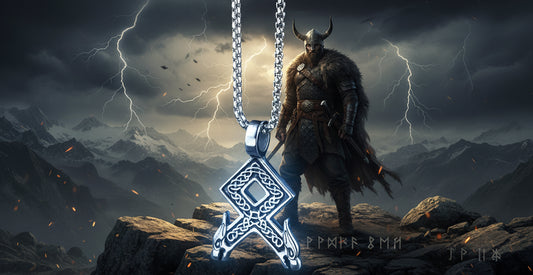
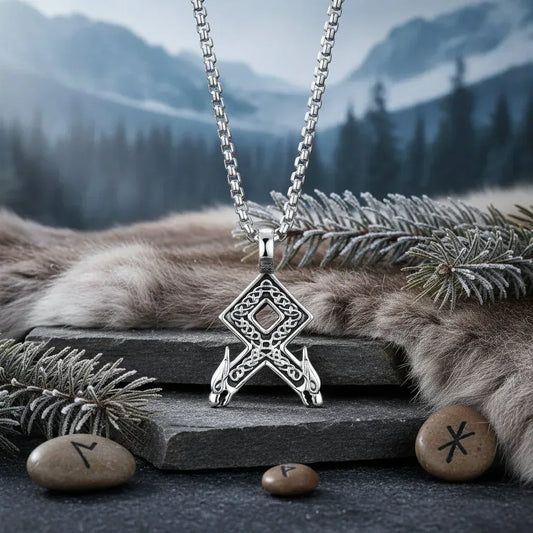
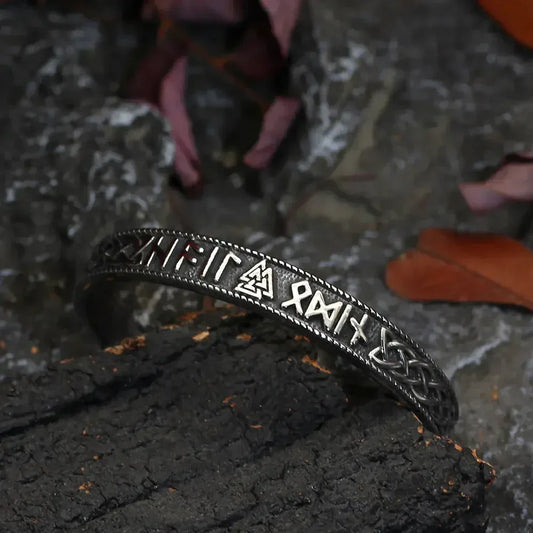
In the Norse tradition, this takes the specific form of runes, the Elder Futhark, where each symbol is simultaneously a phonetic sound and a discrete magical force tied to a specific god and domain. The full system, including bind rune construction and the Ægishjalmr and Vegvisir sigils, is covered in complete depth in our Nordic sigils and Viking magic guide. In broader eclectic and chaos-derived pagan practice, sigil magic follows the letter-method system popularised by Austin Osman Spare, in which a written intention is abstracted into a unique symbol, charged, then released from conscious memory. The complete eight-step process and the full range of purposes it serves, protection, love, abundance, clarity, and more, is covered in our sigils for every purpose guide.
What both systems share, despite arising from entirely different cultural contexts separated by a thousand years and several thousand miles, is the same underlying principle: a symbol charged with focused intention becomes a stable, portable container for that intention, allowing it to operate continuously without requiring constant conscious attention.
Shop Runic and Sigil JewelleryWhat Is the Wheel of the Year?
The Wheel of the Year is the eight-point seasonal festival calendar followed by Wicca and many eclectic pagan paths, marking the solstices, equinoxes, and the four midpoints between them. It is the clearest practical expression of paganism’s identity as a nature-based or earth religion, tying ritual observance directly to the visible movement of the sun and the agricultural cycle rather than to a fixed historical or scriptural calendar.
The Eight Sabbats of the Wheel of the Year (Southern Hemisphere Dates)
Australian and Southern Hemisphere practitioners mark these dates roughly six months offset from Northern Hemisphere tradition, aligning the festival with the actual season it describes rather than the calendar date associated with its Northern origin.
How Does Paganism Differ From Christianity, Islam and Judaism?
What is the core theological difference between paganism and the Abrahamic religions?
The core difference is structural rather than moral: the Abrahamic religions are monotheistic, scripture-based, and built around a single linear historical revelation, while pagan traditions are typically polytheistic or pantheistic, oriented around cyclical natural time, and transmitted through practice and oral tradition rather than a single fixed text.
This distinction explains nearly every practical difference between the two categories. Christianity, Judaism, and Islam each centre on one God and a body of scripture understood as a complete and final revelation, with orthodoxy, correct belief, treated as centrally important. Pagan traditions, ancient and modern alike, have historically placed far greater weight on orthopraxy, correct practice, than on shared belief; two pagans can hold quite different theological views about the nature of divinity while still participating in the same ritual calendar without contradiction. Britannica’s entry on paganism notes that the Abrahamic faiths collectively succeeded in eradicating most pre-Christian religion from the regions they spread through, precisely because their exclusive, single-truth theological structure left little room for the layered, locally variable polytheism that had existed before them.
Time itself is also handled differently. The Abrahamic religions are generally organised around a linear narrative of history moving toward a final endpoint. Pagan traditions are overwhelmingly cyclical, tracking the wheel of the seasons, the phases of the moon, and the recurring agricultural year, a structural difference visible immediately in the Wheel of the Year calendar above.
Read Our Full Comparative GuideIs Paganism the Same Thing as Wicca or Witchcraft?
What is the actual relationship between paganism, Wicca, and witchcraft?
Paganism is the broad umbrella category, Wicca is one specific religion within that category, and witchcraft is a practice, a set of techniques such as spellcraft, divination, and ritual magic, that can exist inside or completely outside any of these religious frameworks, which means the three terms are related but not interchangeable.
Confusing these three terms is one of the most common mistakes made by newcomers and outside observers alike. Every Wiccan is pagan, since Wicca falls within the broader pagan umbrella, but not every pagan is Wiccan; a Heathen, a Druid, or a Hellenic reconstructionist is just as genuinely pagan while following an entirely different religious framework from Wicca. And witchcraft sits in a different category altogether. It is a practice rather than a religion: someone can practice witchcraft as part of a Wiccan religious framework, as part of a completely secular and areligious approach, or as part of an entirely different faith tradition, including, for some practitioners, alongside continued Christian or Jewish identity. According to Britannica, most Wiccans do identify as witches, but the reverse is not true: most people who practice some form of witchcraft do not identify specifically as Wiccan.
Read Our Witchcraft FAQ GuideHow Do You Actually Start Practicing Paganism?
What are the first practical steps to begin a pagan practice?
Begin by choosing a single tradition or an intentionally eclectic path to focus on rather than studying everything simultaneously, then establish three foundational habits in order: marking the lunar cycle, observing at least one seasonal festival, and creating a simple dedicated space for ritual, before adding deity work, divination, or spellcraft on top of that foundation.
Step one: choose a direction, not a destination. You do not need to commit permanently to Heathenry, Wicca, or any single tradition on day one. You do need to pick a starting point, since trying to absorb the Norse, Celtic, Greek, and Slavic traditions simultaneously produces shallow familiarity with everything and depth in nothing. Read primary or well-sourced secondary material on the tradition that most genuinely pulls at you, not the one that seems most popular online.
Step two: mark the moon before you do anything else. Nearly every pagan tradition, ancient and modern, times its practice to the lunar cycle in some form. Simply noticing the moon’s phase each night and journaling how you feel during the new, waxing, full, and waning periods builds the single most foundational skill in pagan practice: attentiveness to natural cycles, which everything else is built on top of.
Step three: observe one sabbat properly before attempting all eight. Choose whichever point on the Wheel of the Year is coming up next relative to today’s date and mark it with even a small, genuine ritual: a candle lit with intention, a seasonal food shared, a moment of acknowledgement for what that point in the cycle represents. A single sabbat observed with real attention teaches more than reading about all eight.
Step four: build a simple dedicated space. This does not require an elaborate altar. A single shelf, a candle, a bowl of water, and one object that feels meaningful to you is a complete and genuine starting altar. Altar supplies can be added gradually as specific practices call for them rather than purchased all at once.
Step five: layer in deity work, divination, or sigil practice once the foundation is steady. Once lunar observance and seasonal ritual feel natural rather than effortful, you are ready to add the deeper layers: a devotional relationship with a specific deity, tarot or rune divination, or sigil-based spellcraft. Adding these before the foundation is stable is the most common reason new practitioners feel scattered or burn out on their own enthusiasm within a few months.
Shop Beginner Practice KitsBuild Your Starting Practice Space
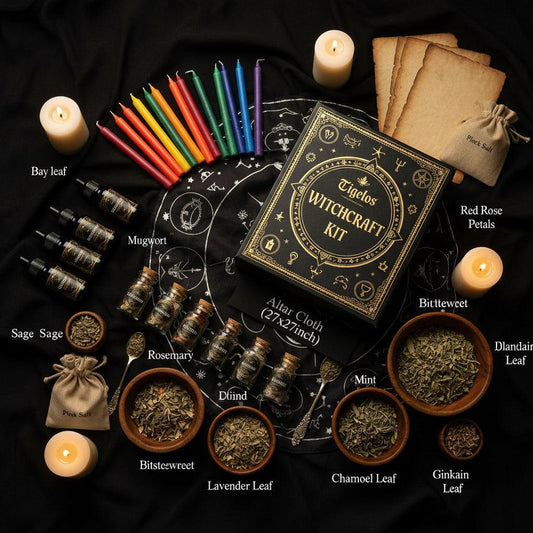
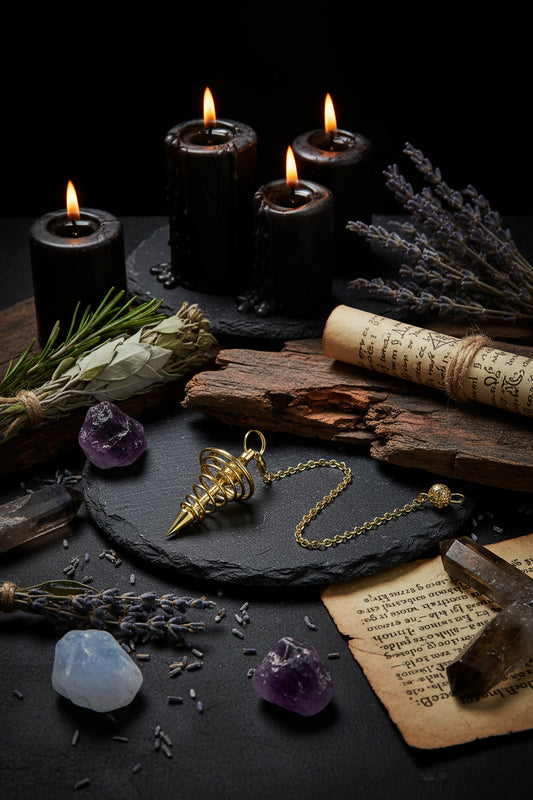
A genuinely complete beginner setup needs very little: one candle for ritual focus, one crystal you feel a genuine pull toward, a small grimoire or journal for tracking lunar and seasonal observance, and access to herbs for simple offerings. Everything else, deity-specific tools, divination decks, sigil materials, can be added as your specific path becomes clearer.
Shop Starter Kits Altar SuppliesWhat Do People Most Often Get Wrong About Paganism?
Do pagans worship the devil or practice evil magic?
No. The concept of a singular devil figure is specific to Abrahamic theology and has no equivalent in most pagan cosmologies, which means the accusation of devil worship is a category error rather than a factual description, applying a framework from one religion to traditions that were never built around that framework in the first place.
This misconception traces directly back to the word origin covered earlier in this guide: pagan was coined by Christians to label everyone outside their faith, and centuries of associating that label with evil followed from the same impulse. According to academic overviews including the one published by Study.com, true practicing pagans are not evil, do not engage in black magic as a defining feature of their faith, and do not worship the devil, a figure that simply does not exist within the cosmological structure of Norse, Celtic, Greek, Slavic, or most other pagan traditions.
The deeper confusion comes from conflating moral neutrality of magic itself, a tool that can be used well or poorly, with moral character of an entire religious category, which is a far broader and far less accurate claim.
Is paganism a new religion or an ancient one?
Both, depending on which specific tradition is meant: the ancient polytheistic religions that inspire modern paganism are genuinely ancient, often thousands of years old, while most of today’s organised pagan religions, including Wicca, are themselves twentieth-century new religious movements that draw on that ancient inspiration without being direct, unbroken continuations of it.
Scholars including those cited by Britannica generally treat modern Pagan religions as new religions inspired by extinct pre-Christian traditions rather than as literal unbroken survivals, even though many individual practitioners experience and describe their practice as a genuine continuation or revival rather than an invention. Both framings can be true simultaneously: the inspiration is ancient, the organised religious structure built around that inspiration is modern.
Practitioner Notes · Starting a Pagan Practice Well
- ◆Read primary sources where they exist. For Norse practice, the Eddas. For Greek, Hesiod and the Homeric Hymns. For most other traditions, the surviving fragments are smaller, which makes careful secondary scholarship more important, not less.
- ◆Practice before you label yourself. You do not need to decide you are definitively Wiccan, Heathen, or eclectic before beginning. Most long-term practitioners arrive at their tradition through several months or years of genuine practice, not through reading a list of options and picking one in advance.
- ◆Separate the historical record from the modern revival honestly. Acknowledging that contemporary Druidry, for example, is substantially reconstructive rather than an unbroken survival does not diminish its validity as a living spiritual path. Honesty about the gap between ancient and modern strengthens practice rather than undermining it.
- ◆Respect the traditions you are not part of. Aboriginal Australian, Native American, and other living indigenous spiritual traditions are not pagan in the historical European sense of the term and should not be folded into the category without the consent and involvement of the communities themselves.
- ◆Let practice, not belief, be your first measure of progress. Most pagan traditions historically valued correct, consistent practice over uniform belief. Track your seasonal observances and lunar attentiveness before worrying about whether your theology is fully settled.
The First Threshold: A Beginner’s Dedication Ritual for Starting a Pagan Path
A complete, gentle ritual for marking the genuine beginning of a pagan practice, whatever specific tradition you go on to follow. This is not an initiation into any particular religion. It is a personal threshold marker, a way of saying to yourself, clearly and deliberately, that you are beginning.
-
Sit somewhere quiet, ideally outdoors or near a window. Take five slow breaths. Notice the time of day, the season, the moon’s current phase if you can recall or check it.
-
Light the candle. Speak simply: "I am beginning. I do not need to know everything yet. I am simply beginning."
-
Touch the water. Water has marked beginnings and thresholds across nearly every tradition this guide has covered. Touch it to your forehead or wrists and say: "I open myself to what this path will teach me."
-
Hold the crystal. Feel why you were drawn to this particular stone. You do not need a correspondence chart for this step. Simply notice.
-
Write the date and one honest sentence in your notebook. Not a plan, not a five-year vision. One true sentence about why you are starting this practice today.
-
Snuff the candle and close. Speak: "The threshold is crossed. The practice begins."
Return to this exact ritual one year from today and read what you wrote. Most practitioners find this simple act more clarifying than any amount of advance research could have been.
Marking the Turn: A Simple Sabbat Observance for Any Point on the Wheel
A flexible, repeatable ritual structure that works for any of the eight sabbats on the Wheel of the Year, adjustable to whichever point in the cycle is closest to today. Use the dates in the Wheel of the Year reference above to find your next sabbat, then adapt this structure to that specific season.
-
Identify what this point in the wheel represents. Using the reference table above, name what is actually happening: a harvest, a thinning veil, a returning light, a peak of growth. Say it aloud in your own words rather than reciting a definition.
-
Bring in something from outside. Even in a city, a single fallen leaf or a stone from a footpath connects the ritual to the literal, physical season rather than an abstract date on a calendar.
-
Light the candle and name what you are releasing or welcoming. Waning points on the wheel (Mabon, Samhain) suit release. Waxing points (Imbolc, Ostara, Beltane) suit welcoming. The peaks (Litha, Yule) suit acknowledgement of where you currently stand.
-
Make the offering. Place your seasonal food outside for wildlife, or simply set it on your altar with the words: "I honour this turn of the wheel and what it brings."
-
Write one line in your grimoire naming this sabbat, the date, and one honest observation about where you are in your own life as this season turns.
-
Close simply. Snuff the candle: "The wheel turns. I turn with it."
Repeating this same simple structure across all eight sabbats over a full year is one of the most reliable ways to build a genuine, embodied sense of pagan practice, far more effective than reading about the Wheel of the Year without ever marking a single point on it.
Everything to Begin, in One Place
Candles, crystals, herbs, divination tools, and complete beginner kits for whichever pagan path calls to you, all available now with free shipping over $35 across Australia and the US.