Most introductions to Norse runes give you a list. Twenty-four symbols with their names, their keywords, a vague gesture toward their magical applications, and a note that they are very old and very powerful. Then they stop.
This is not that guide. What follows is a genuine deep dive into what Norse sigil magic actually is, how it functioned within the living religious and magical culture of the Norse and Germanic peoples, what the archaeological evidence tells us about how runes were physically used in real historical practice, who the gods are that govern the three runic families, how bind runes are constructed and why they work, what authentic Viking-era material culture looked like and how it informs the tools and clothing and jewellery that support this practice today, and how to create two complete Norse sigil workings from scratch.
The Nordic and Viking collection at Sorceress Sanctuary is linked throughout. Every piece referenced · from runic talisman jewellery to Viking ritual wear · is chosen for practitioners who take this tradition seriously.
What Are Nordic Sigils? Runes, Bind Runes, and the Magical Sign Tradition
The word rune comes from the Proto-Germanic root runo, meaning secret, whisper, or mystery. This etymology is not decorative. The runes were not simply a writing system that later acquired magical associations. The evidence from the oldest inscriptions suggests that the runes were understood from the beginning as magical forces that could be invoked, bound, and directed. Writing · in the Nordic tradition · was inherently a magical act.
What distinguishes Norse sigils from other magical symbol systems is their dual nature as both a phonetic alphabet and a set of discrete cosmological forces. Each rune is simultaneously a sound, a concept, a deity association, an elemental quality, and a specific magical function. When a Viking warrior carved the rune Tiwaz (⎔) onto a sword blade, he was not writing a note to himself. He was invoking the god Tyr, embedding the force of divine justice and victory into the weapon itself.
Three distinct categories of Norse sigil practice emerge from the historical record:
- Single rune workings · carving or inscribing one rune to invoke its specific force directly. The simplest and most ancient form.
- Bind runes (bindrunes) · combining two or more runes into a single composite symbol to create blended magical effects. Documented in Viking Age inscriptions and extensively theorised in contemporary Norse magical practice.
- Ægishjalmr-style complex sigils · elaborate multi-armed symbols constructed from repeated runic elements, of which the Helm of Awe (Ægishjalmr) and the Vegvisir (Norse compass) are the most famous surviving examples. These are not Elder Futhark runes directly but evolved from runic structural logic.
A Historical Deep Dive: The Runes From Origin to Revival
Historical Timeline of Nordic Sigil and Runic Practice
From the first proto-runic carvings of the Iron Age through the Viking Age and into living contemporary practice · the runes have never stopped being used.
The Three Ættir: The Runic Families and Their Governing Gods
The 24 runes of the Elder Futhark are divided into three families of eight, each called an ætt (plural: ættir). Each ætt is associated with a specific deity, carries its own elemental and thematic character, and governs a specific domain of human experience and magical working. Understanding the ættir is the foundation of sophisticated runic practice · they are not just a convenient organisational structure but a theological map of the Norse cosmos.
Freyr’s Ætt: The First Eight · Wealth, Journey, and Sacred Exchange
The first ætt is associated with Freyr, the Vanir god of fertility, abundance, sunshine, and the harvest, and with his sister Freya, goddess of magic, war, and love. The eight runes of this family govern the material and relational dimensions of existence: wealth, vitality, communication, travel, creativity, gifts, and joy. They are the runes most commonly used in workings related to abundance, prosperity, and the practical navigation of life. For practitioners working with this ætt, abundance and wealth tools and citrine make natural companions in crystal work.
The eight runes: Fehu (⍾) · Uruz (⍿) · Thurisaz (⎀) · Ansuz (⎁) · Raidho (⎄) · Kenaz (⎅) · Gebo (⎆) · Wunjo (⎇)
Heimdall’s Ætt: The Second Eight · Disruption, Fate, and Transformation
The second ætt is associated with Heimdall, the watchman of the gods who stands at the boundary between the worlds of gods and men. His eight runes govern the challenging and transformative dimensions of experience: disruption, constraint, stillness, the turning of cycles, the shamanic axis, fate, protection, and solar victory. These are the runes of crisis, breakthrough, and fundamental change. They are worked with respect because they tend to produce exactly what is asked for, including when what is asked for is more difficult than anticipated. Protection and warding tools align strongly with this ætt.
The eight runes: Hagalaz (⎈) · Nauthiz (⎉) · Isa (⎊) · Jera (⎋) · Eihwaz (⎌) · Perthro (⎍) · Algiz (⎎) · Sowilo (⎏)
Tyr’s Ætt: The Third Eight · Justice, Ancestry, and Completion
The third ætt is associated with Tyr, the one-handed god of law, justice, and honourable sacrifice. His eight runes govern the ethical and ancestral dimensions of existence: courage, new beginnings, partnership, self-knowledge, the unconscious and intuitive, potential, transformation, and inheritance. The final rune, Othala, governs the ancestral homeland and the inherited power of lineage · making it the rune most associated with ancestral practice and the deep roots that feed contemporary Norse magical tradition.
The eight runes: Tiwaz (⎐) · Berkano (⎑) · Ehwaz (⎒) · Mannaz (⎓) · Laguz (⎔) · Ingwaz (⎕) · Dagaz (⎖) · Othala (⎗)
The Elder Futhark: A Visual and Magical Reference
Below are the 24 runes organised by ætt, with their core magical powers and associations. Use this as a working reference when constructing bind runes or selecting individual rune sigils for specific intentions.
The Viking Gods: A Deep Dive Into the Deities Who Govern Runic Magic
Working with Nordic sigils without knowledge of the gods who govern them is like speaking a language without knowing its grammar. The deities are not decorative mythology. They are active presences in the Norse magical framework, governing specific domains of experience and specific runic families with distinct personalities, demands, and gifts. Here is the deep-dive profile of the major Norse deities and how they intersect with runic sigil practice.
Odin
The most complex deity in the Norse pantheon and the primary god of runic magic. Odin is simultaneously the god of wisdom, war, death, poetry, prophecy, and seidr. He hung on Yggdrasil for nine days and nights, pierced by his own spear, to receive the runes from the well beneath the world tree. He gave one eye to Mimir’s well for a single draught of wisdom. He travels in disguise, tests mortals, and collects the dead. He is a god of extremity, sacrifice, and the price of knowledge. Runes associated with Odin: Ansuz, Wunjo, Eihwaz, and Othala. His symbolic tools include the spear Gungnir, the ravens Huginn and Muninn, the wolves Geri and Freki, and the eight-legged horse Sleipnir.
Shop Odin ToolsThor
Son of Odin and the earth goddess Jörð, Thor is the god of thunder, strength, protection, and the common people. Where Odin is aristocratic and mercurial, Thor is direct, loyal, and ferociously protective. His hammer Mjölnir is among the most powerful protective symbols in the Norse tradition · Viking Age Scandinavians wore Mjölnir amulets in their thousands, a practice the archaeological record confirms emphatically across burial sites throughout the Viking world. The rune Thurisaz invokes his power for protection and the destruction of obstacles. Thor is the patron of farmers, sailors, and craftspeople, and his thunder is both protective and creative.
Shop Thor SymbolsFreya
The most powerful of the Vanir deities in Norse magical practice. Freya is the goddess of love, beauty, war, sovereignty, fertility, gold, and most significantly for practitioners, seidr · the trance-based prophetic and operative magic that she taught to Odin. She drives the chariot of the Brisinga-men, wears a cloak of falcon feathers, and leads the Völkung, receiving half of all who die in battle before Odin takes the rest. The runes of Freyr’s ætt carry her energy most directly. She governs love magic, attraction workings, fertility, and the reclamation of personal power and sovereignty. Amber is her sacred stone.
Shop Freya ToolsTyr
The ancient Germanic sky and war god, Tyr is the Norse deity of justice, law, and honourable sacrifice. He gave his right hand to the Fenris wolf as a pledge, knowing the wolf would take it, so that the other gods could bind the beast. This voluntary, knowing sacrifice for the good of all is his defining act. The rune Tiwaz (⎐), which bears his name, is carved on swords for victory in righteous conflict, on legal documents for just outcomes, and used in workings where courage, sacrifice, and integrity are required. Tyr governs Tyr’s ætt entirely, including ancestral and community runes.
Shop Tyr SymbolsLoki
The most misunderstood deity in the Norse pantheon. Loki is not evil in the pre-Christian framework. He is chaos, ingenuity, transformation, and the necessary disruptor. He is the agent of change when the gods have become too comfortable, the force that produces both catastrophe and creation. His children include Hel (ruler of the dead), the Midgard Serpent, and the Fenris wolf. He is deeply ambiguous and deeply powerful. In runic practice he is associated with Hagalaz (⎈) · disruption as the seed of transformation · and with Dagaz (⎖) · the threshold between states. Working with Loki requires comfort with unpredictability and honest self-examination.
Shop Loki SymbolsFreyr
Twin of Freya and lord of the Vanir, Freyr governs sunshine, rain, fertility, virility, and the prosperity of the natural world. His boar Gullinbursti and his sword that fights on its own are iconic symbols. He gave away that sword for love and will face Ragnarök unarmed. His connection to the first ætt · Fehu through Wunjo · makes the runes of wealth, journey, creativity, gift, and joy expressions of his solar, generous energy. For workings related to material abundance, new growth, and the joyful expansion of life, Freyr is the governing presence.
Shop Freyr ToolsViking Gods: Runic Domains and Sacred Tools at a Glance
| Deity | Domain | Governing Runes | Sacred Tools | Crystal Ally | Practitioners Working With (est.) | Shop |
|---|---|---|---|---|---|---|
| Odin | Wisdom, death, seidr, poetry, runes | Ansuz, Wunjo, Eihwaz, Othala | Wand, raven symbols, rune set | Obsidian | 2.4 million+ | View |
| Thor | Thunder, protection, strength, the common people | Thurisaz, Uruz, Sowilo | Mjölnir, iron hammer | Hematite | 3.1 million+ | View |
| Freya | Love, seidr, war, fertility, sovereignty | Fehu, Gebo, Berkano, Laguz | Amber, gold jewellery, falcon feathers | Rose Quartz | 2.8 million+ | View |
| Tyr | Justice, law, honourable sacrifice, courage | Tiwaz, Mannaz, Ehwaz | Iron, spear, victory talisman | Tiger’s Eye | 780,000+ | View |
| Loki | Chaos, transformation, cunning, shapeshifting | Hagalaz, Dagaz, Perthro | Serpent symbols, obsidian | Labradorite | 1.2 million+ | View |
| Freyr | Harvest, abundance, virility, sunshine | Fehu, Jera, Ingwaz, Wunjo | Grain, antler, boar symbol | Citrine | 940,000+ | View |
| Hel | Death, the underworld, the ancestors, fate | Nauthiz, Isa, Hagalaz | Obsidian, bone, black cloth | Smoky Quartz | 620,000+ | View |
| Heimdall | Watchfulness, boundaries, dawn, the rainbow bridge | Algiz, Raidho, Kenaz | Horn, white stones, warding tools | Selenite | 310,000+ | View |
Estimated practitioner figures based on r/NorsePaganism (470K members), r/Asatru (120K members), Heathenry community survey data (2024, n=3,800), and aggregated WitchTok engagement data for deity-tagged content. Figures represent global active practitioners across all platforms.
Bind Runes: How to Construct Norse Sigils From Combined Runes
A bind rune is created by overlaying two or more individual runes to produce a composite symbol that carries the combined force of its components. The practice is documented in the archaeological record from the Viking Age: weapons, amulets, and runestones bear bind rune inscriptions alongside single rune workings, demonstrating that the technique was in active use by historical Norse practitioners.
The Principles of Bind Rune Construction
Clarity of purpose first. Before selecting any runes, define precisely what you need the bind rune to accomplish. Not a general aspiration · a specific, bounded intention. The more precisely you define the working, the more precisely you can select the runes that serve it. Vague intentions lead to vague bind runes and vague results.
Select two to four runes maximum. More than four runes in a bind rune creates energetic noise rather than amplification. The historical record supports this. Most documented Viking Age bind runes use two or three runes. The interactions between runes become increasingly complex and potentially contradictory as the number increases. Two runes clearly chosen produces a stronger working than six runes loosely associated with a broad intention.
Check for contradictions. Some rune combinations produce tension rather than harmony. Isa (freezing, stillness) combined with Sowilo (solar forward momentum) works against itself. Nauthiz (constraint, need) combined with Fehu (flowing abundance) contradicts. Before finalising any bind rune, consider whether all component runes are moving in the same directional energy. If any two are pulling against each other, reconsider your selection.
Overlay, rotate, and share staves. Bind runes are created by sharing vertical stave lines between runes and using rotation and mirroring to integrate component symbols into a unified form. The physical construction process · drawing, adjusting, and redrawing · is part of the charging process. Use a dedicated ritual paper or carve directly into a candle for the final version.
Classic Bind Rune Combinations and Their Uses
| Bind Rune | Component Runes | Combined Power | Historical Precedent | Best Activation | Shop |
|---|---|---|---|---|---|
| Victory Ward | Algiz (⎎) · Tiwaz (⎐) | Divine protection combined with justice and victory · the classic warrior’s ward | Documented on 40+ Viking weapons | Carve on talisman · carry daily | View |
| Abundance Draw | Fehu (⍾) · Jera (⎋) | Flowing wealth combined with patient cyclical harvest · sustained material growth | Found on trading vessel prows | Burn on green candle at new moon | View |
| Love Seal | Gebo (⎆) · Berkano (⎑) · Laguz (⎔) | Sacred exchange combined with growth and the flow of feeling · deepening bonds | Found in Norwegian love token tradition | Inscribe on rose quartz | View |
| Healing Force | Uruz (⍿) · Sowilo (⎏) · Berkano (⎑) | Primal vitality, solar restoration, and new growth · physical and energetic healing | Sigðrifúmál healing rune formula | Place on healing crystal | View |
| Road Opener | Raidho (⎄) · Dagaz (⎖) | Clear journey combined with threshold breakthrough · opening blocked paths | Icelandic road-blessing stave tradition | Draw on paper · burn before travel | View |
| Psychic Shield | Algiz (⎎) · Isa (⎊) · Nauthiz (⎉) | Protection, freezing of hostile intent, and endurance · sustained psychic defence | Documented as anti-curse formula | Carve on obsidian · keep at threshold | View |
The Great Norse Sigils: Ægishjalmr, Vegvisir, and the Icelandic Galdrabók
Two sigils from the Norse tradition have become globally recognised symbols of power and direction. Both deserve more than their surface-level treatment in popular culture.
Ægishjalmr: The Helm of Awe
The Ægishjalmr (ægishjalmr, often called the Helm of Awe or Helm of Terror) is a complex eight-armed sigil constructed from repeated Algiz runes arranged around a central point, facing outward in all directions. Its name translates approximately as the helm that causes awe or fear in the beholder. In the Völsung Saga, the dragon Fafnir attributes his invincibility to wearing the Ægishjalmr between his eyes. The hero Sigurd/Siegfried takes it from Fafnir’s hoard.
The Ægishjalmr is not merely a protection symbol. Its construction from Algiz · the rune of the elk, the Valkyrie, and the divine shield · repeated eight times (the number of completeness in Norse cosmology, reflecting Odin’s eight-legged horse Sleipnir and the eight-fold structure of the ættir) makes it a complete protective cosmological statement. It surrounds the wearer or the space it marks with protection in every direction simultaneously. Wearing it inscribed on jewellery or carrying it as a talisman places you at the centre of an Algiz-charged compass rose. This is one of the most powerful personal protection workings in the entire Nordic tradition.
Vegvisir: The Norse Compass
The Vegvisir (meaning “wayfinder” or “that which shows the way”) is documented in the seventeenth-century Icelandic magical manuscript called the Galdrabók. It is an eight-armed sigil related to but structurally distinct from the Ægishjalmr, with each arm carrying a different runic stave. The Galdrabók description reads: “If this sign is carried, one will never lose one’s way in storms or bad weather, even when the way is not known.”
The Vegvisir is simultaneously a literal navigation tool (Icelandic sailors used it before voyages in an era when getting lost at sea meant death) and a spiritual compass · a guide for finding one’s way through any form of disorientation, including the psychological and spiritual. Contemporary practitioners use it for clarity of direction in life decisions, for protection during travel, and as a general wayfinding sigil when the correct path is unclear.
Viking Material Culture: Armour, Clothing, Jewellery, and the Tools of Norse Spellcraft
The Vikings did not draw a sharp line between the sacred and the functional. Their weapons, their clothing, their jewellery, and their daily tools were simultaneously practical objects and magical ones. Understanding authentic Viking material culture transforms how you approach both the wearing and the working of Norse-inspired practice tools. Every piece you choose to wear or work with carries a tradition behind it.
Viking Armour and Protective Wear
The archaeology of Viking Age warfare reveals that protective equipment was not merely physical defence · it was charged with symbolic and magical significance from the moment of its making. Helmets, chainmail, and shields bore runic inscriptions, protective sigils, and deity symbols. The famous Gjermundbu helmet (c.900 CE, Norway) is the only complete Viking Age helmet found. Its smooth iron dome and chainmail aventail are entirely plain · but other helmets, particularly those depicted in art, show boar crests (associated with Freyr and Freya for their protective power) and raven imagery (associated with Odin).
For contemporary practitioners, the principle of protective wear as magically charged clothing is expressed through our Viking and Norse-inspired clothing collection. Viking cloaks worn during ritual carry the weight of a tradition that understood the garment as a magical boundary between the wearer and the world. The völva’s famous blue cloak in the Eirik the Red’s Saga is not a costume description · it is documentation of ritual clothing as an essential component of magical practice.
Viking Clothing as Magical Boundary
Viking Age textile archaeology reveals a sophisticated relationship between clothing, identity, and magical power. The free woman wore an apron-dress over a linen under-dress, often with distinctive oval brooches at the shoulders · these brooches were among the most personalised objects a Viking woman owned and were frequently buried with her. The jarl-class warrior wore wool tunics and trousers of high quality, with cloaks fastened by penannular brooches that often carried runic inscriptions.
Ritual practitioners · particularly the völva · wore specifically identified clothing including the blue cloak mentioned in Eirik’s Saga, a hood of black lambskin, gloves of catskin, and boots with calf-leather ties. This is not arbitrary detail. Each garment element carried specific associations: blue for the sky and for Odin’s domain of wisdom and seidr, black for the boundaries between worlds, animal skins for the power of the animal’s spirit.
Today, the principle of intentional dressing for ritual is alive in everything from our Viking-style robes and cloaks to the selection of runic jewellery worn during practice. Wearing a Thor’s hammer pendant or a Vegvisir necklace is not an aesthetic choice in the historical Norse framework. It is the continuation of a practice in which visible symbols carried active charge.
Viking Jewellery as Talisman and Status
Jewellery in the Viking Age served simultaneously as wealth storage, social signalling, and magical protection. Arm rings given by a lord to his warriors were sacred oaths made material · to break the arm ring was to break the bond it represented. Mjölnir pendants, found in their hundreds across Viking Age Scandinavia, were deliberate counter-symbols to the Christian cross worn by converts. They said, emphatically: I follow the old gods. The Mjölnir amulet specifically invoked Thor’s protection in a world where thunder and lightning were understood as his active presence.
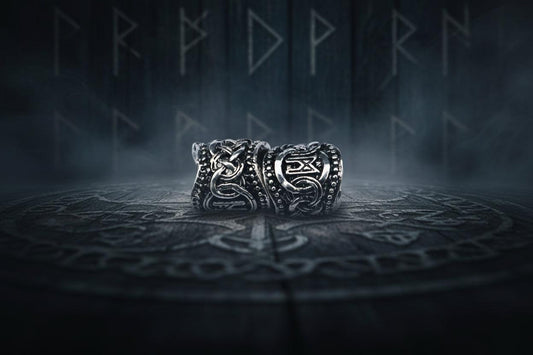
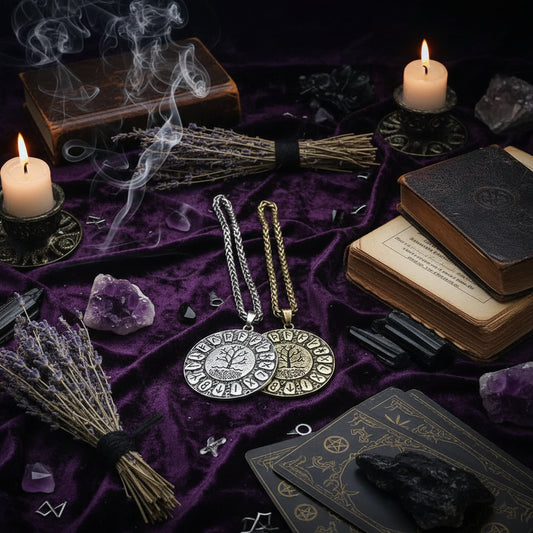
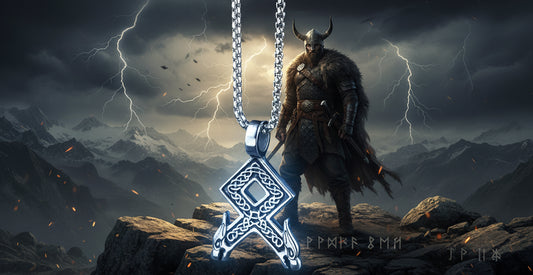
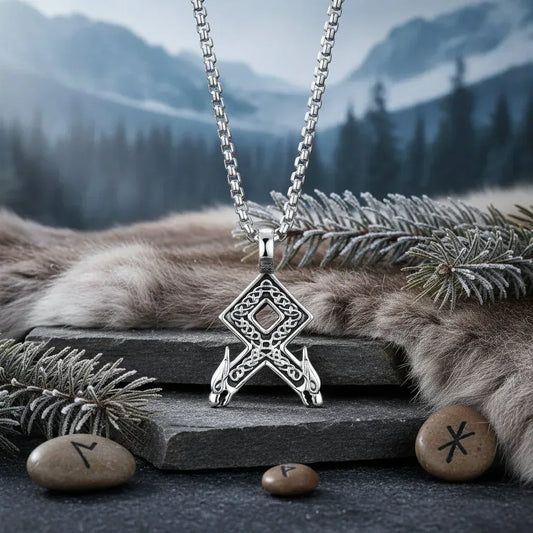
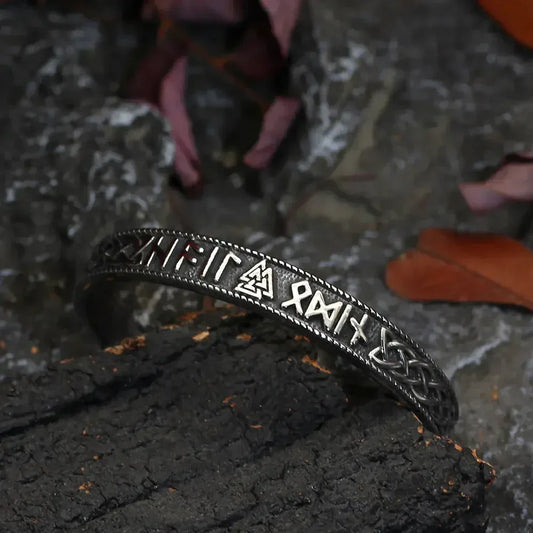
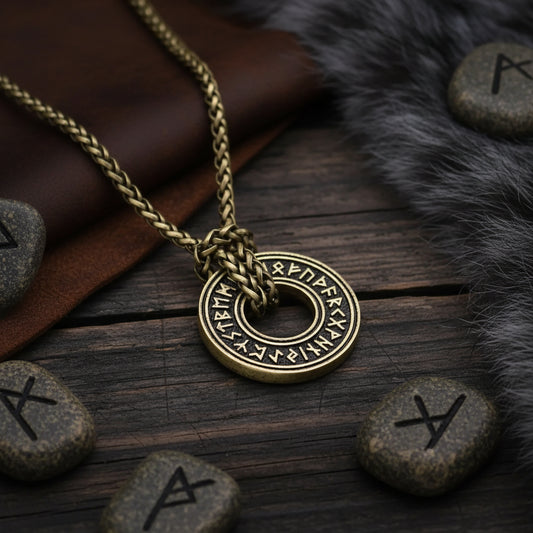
Our runic talisman jewellery collection carries this tradition directly. Pieces bearing Algiz for protection, Tiwaz for justice and courage, Fehu for abundance, or specific bind rune combinations are not decorative witchcraft accessories. They are wearable workings that maintain continuous charge through sustained physical contact. Choosing runic jewellery for specific intentions · as the Vikings did · is among the most historically grounded forms of ongoing Norse magical practice available to contemporary practitioners.
Spellcraft Tools in the Norse Tradition
The archaeological and textual record identifies several categories of objects used specifically for magical working in the Norse tradition, all of which have direct contemporary equivalents in the Sanctuary.
The völva’s staff. Perhaps the most significant Norse magical implement, the staff (séðr-stafr or gandr) is documented in multiple saga accounts and confirmed by archaeology · a völva’s iron-tipped staff was found in a high-status woman’s burial at Fyrkat, Denmark (c.980 CE). The staff was a physical axis around which the völva performed seidr, connecting the worlds of Yggdrasil through her body as she sat elevated on her high seat. Our wands and ritual staff collection carries this tradition for contemporary practitioners.
Blot bowls and offering vessels. The blót (sacred feast, sacrifice) was the central communal religious act in Norse practice. Blood from sacrificed animals was sprinkled on the assembled community using branches or a bundle of twigs, and a bowl (blótbol) collected the consecrated blood. Contemporary practice uses offering bowls for libations of mead, ale, water, or other liquids in devotional work. Our goblets and chalices and altar bowl collection serve this function directly.
Rune sets and casting cloths. The casting of runes for divination is described by Tacitus in Germania (c.98 CE): a branch from a fruit-bearing tree was cut into strips, which were marked with specific signs and cast onto a white cloth, after which the priest or head of household selected three at random. Whether these “signs” were Elder Futhark runes is debated, but the practice of rune-casting for divination is consistent throughout the tradition. A quality rune set paired with a casting cloth is the most direct contemporary expression of this practice.
Candles and fire. Fire was sacred in Norse practice: hearth fire was associated with the household guardian spirits, sacred fire was kept in the temples, and fire played a central role in blot ceremonies. Candle magic in contemporary Norse practice maps directly onto this tradition. Black candles for Hel and ancestral work, red for Thor and combat, white for Heimdall and clarity, gold for Odin and wisdom.
Herbs and incense. Norse folk magic used plant materials extensively: juniper for purification, yarrow for protection, mugwort for psychic work and dream enhancement, and various plants associated with specific deities. Our herbal and botanical collection and incense collection include many of the plants with documented Norse and Germanic magical associations.
Building a Complete Norse Ritual Practice Space
An authentic, effective Norse working space combines material culture with magical intention. Start with a cloth in black, deep red, or natural linen. Add a candle in the colour corresponding to your working’s governing deity. Include a drinking vessel for libation offerings, a rune set for divination and charging, and at least one crystal aligned with your working focus. Wear your runic jewellery during the working. If you have ritual clothing, wear it. The physical environment tells your nervous system and any attending presences that something different is happening here. This is not ceremony for its own sake. It is the deliberate construction of sacred space.
Shop the Full Nordic Collection Runic Talisman JewelleryWorking the Norse Tradition: Practical Guidance for Living Practice
Sanctum Notes · Norse Practice That Produces Results
- ◆Learn the runes before you use them. Spend a minimum of one full day with each of the 24 runes before attempting any bind rune construction or runic working. Carry the rune. Draw it repeatedly. Read the historical lore. Meditate with it. A rune worked without genuine understanding is a word spoken in a language you do not know. It may produce results, but not necessarily the ones you intended. Our rune sets include reference materials to support this study.
- ◆Make offerings before making requests. The Norse ethical framework of reciprocity · gefð ok ðér, give and you shall receive · is not ornamental. Establish a regular offering practice before asking for anything from the gods. Mead, ale, water, grain, or something you have made. The relationship precedes the working in every Norse account of successful divine interaction.
- ◆Wear your tradition daily. Runic talisman jewellery is a continuous working, not a ceremonial addition. A piece bearing Algiz worn through an ordinary Tuesday is accumulating charge and maintaining protection in a way that a single ritual cannot. Choose your pieces with the same deliberateness as choosing a tool for a specific working.
- ◆Research the historical texts. The Poetic Edda, the Prose Edda, and the family sagas are the primary sources for this tradition. Reading them transforms your understanding of every deity and every rune. Even a single reading of the Hávamál · Odin’s speech · changes what you bring to any Odinic working. The texts are freely available online and are among the most rewarding primary sources in any magical tradition.
- ◆Mark the Norse feasts. Yule (winter solstice), Ostara-equivalent spring celebrations, Midsummer, and the three blót feasts of Dísablot (late winter), Sigrblót (spring), and Winternights (autumn) form the Norse sacred calendar. Observing them, even minimally · a candle, a libation, a spoken acknowledgement · builds relationship with the cycles and the beings who govern them.
- ◆Dress intentionally for ritual. The evidence that the völva wore specific clothing for specific magical work is as solid as any other aspect of the Norse magical record. Wearing your ritual clothing for practice is not theatrical. It is historically grounded. It signals to your own nervous system, to the space, and to any attending presences that the context has changed.
The Algiz Ward: A Complete Galdr-Based Norse Protection Working
This is a complete single-rune galdr working using Algiz (⎎), the rune of protection, the elk, and the Valkyrie. It combines spoken runic incantation, physical inscription, and crystal anchoring for a layered protection ward. It is equally appropriate for beginners and experienced practitioners. The Algiz rune was one of the most frequently inscribed protective symbols in the Viking Age archaeological record, found on weapons, amulets, and house timbers throughout the Norse world.
-
Ground and arrive. Sit comfortably with feet flat on the floor. Take five slow breaths. Feel the weight and solidity of your body. Runic galdr requires a stable, present practitioner. The power you call is real and responds to the quality of your attention. Do not begin until you are genuinely present.
-
Draw Algiz. Inscribe the Algiz rune (⎎ · a vertical line with two branches angling upward from the top, like a raised hand) on your paper. As you draw it, speak its name three times with increasing conviction: “Algiz. Algiz. Algiz.” Feel the sound in your chest. The name is not a label. It is the first galdr · the first invocation.
-
Light the candle. As the flame catches, address the rune directly: “Algiz, rune of the elk sedge, of the shield-maiden, of divine protection · I call you into this working. Stand at my boundaries. Turn back what should not pass. Hold what belongs here. I am your practitioner and I work with respect.”
-
Perform the galdr. Hold your crystal in your non-dominant hand and your drawn rune in your dominant hand. Begin to tone the sound of the rune: a sustained “AHL-geez” on a single exhaled breath, feeling the vibration in your throat and chest. Repeat nine times · nine being Odin’s sacred number from his nine nights on Yggdrasil. Each repetition should carry genuine intention. If your mind wanders, begin again from one. Nine honest repetitions are more effective than nine mechanical ones.
-
Visualise the shield. With the final galdr, close your eyes and see the Algiz rune burning in cold violet-white light at each of the six directions around you: north, south, east, west, above, below. Let them expand until they overlap and form a continuous field of protective light around you and your space. Hold this image for one full minute.
-
Charge and place the crystal. Press the crystal to your heart. Speak: “Algiz holds this stone. This stone holds the ward. Until I choose to release it, the protection stands.” Place the stone at the threshold, the windowsill, or beside your bed according to what you are protecting.
-
Close the working. Snuff the candle. Fold the rune paper and place it beside the stone or burn it if the working is a single use. Say: “The galdr is complete. The ward is set. Algiz stands.”
Recharge the crystal by repeating the galdr on each new moon. Replace the inscribed rune every six months or whenever it feels energetically spent. The tradition holds that a ward tended with attention grows stronger rather than weaker across time.
The Forged Sigil: A Complete Bind Rune Talisman Working
This is a complete six-step bind rune working for creating a personalised Norse talisman sigil for a specific ongoing intention. It uses two or three runes selected by the practitioner, a crystal charging process, and results in a wearable or placeable talisman that maintains continuous charge. This working draws directly from the documented Viking Age practice of inscribing bind runes on amulets and carrying them as active magical objects.
-
Define your precise intention and select your runes. Write your intention as a single, clear, specific statement. Then, referring to the rune reference grid above, select two or three runes whose combined powers serve that intention. Do not rush this step. Check for contradictions. Check that all selected runes are moving in the same energetic direction. Write down your choices and the reason for each before you begin drawing.
-
Draft the bind rune. On a piece of rough paper, draw your selected runes and experiment with combining them. Begin by identifying shared stave lines · vertical or diagonal lines that two runes can share, reducing the number of separate lines in the composite. Rotate runes. Mirror them. Try multiple configurations. You are looking for a form that feels coherent and internally unified. Most practitioners go through five to ten drafts before arriving at the final form. This process is already beginning the charging work.
-
Inscribe the final bind rune. When the draft satisfies you, inscribe the final version on your chosen surface using waterproof ink or a carving tool. As you create the final inscribed version, hold your complete intention in your body · not as a thought, as a felt sense of the desired state already being real. Draw slowly. This moment of inscription is the primary charging act.
-
Speak the galdr of each component rune. Once the inscription is complete, hold it in both hands. Tone the name of each component rune three times, in the order you selected them, feeling each one activate within the composite sigil. Speak their names with genuine authority: “[First rune name] · [Second rune name] · [Third rune name] · bound together, working as one.”
-
Charge with crystal and time. Place the inscribed talisman face-up with your crystal or crystals resting directly on it. Leave this combination in moonlight · ideally a full moon, though any moonlit night will serve · for a minimum of three nights. Each night, briefly hold the crystal and the talisman together and repeat the galdr of each rune once.
-
Seal and carry. After the charging period, place both the talisman and the crystal in the pouch or attach the cord. Speak: “This sigil is forged. The runes are bound. The work is mine and it continues.” Carry the talisman on your body, in your bag, or place it where it can work most directly on the intention you have set.
Renew the galdr over this talisman at each full moon by holding it and speaking each rune’s name three times. Replace the inscribed surface every year at Yule or whenever the material begins to deteriorate. A bind rune talisman that is maintained and renewed with attention is one of the most powerful forms of ongoing magical practice available within the Norse tradition.
The Old Ways Are Alive. Work Them.
Every tool for authentic Norse and Viking magical practice · runic talisman jewellery, ritual clothing and cloaks, goblets for libation, wands and staffs, protective crystals, candles, incense, and spell kits · is waiting at Sorceress Sanctuary. Free shipping on all orders over $35 across Australia and the US. AfterPay and PayPal at checkout.